Aktuelles – 2025

Auf dieser Seite finden Sie aktuelle Meldungen der Professur „Biotechnologie, Natur und Gesellschaft".

Für vergangene Nachrichten besuchen Sie bitte unser Archiv.


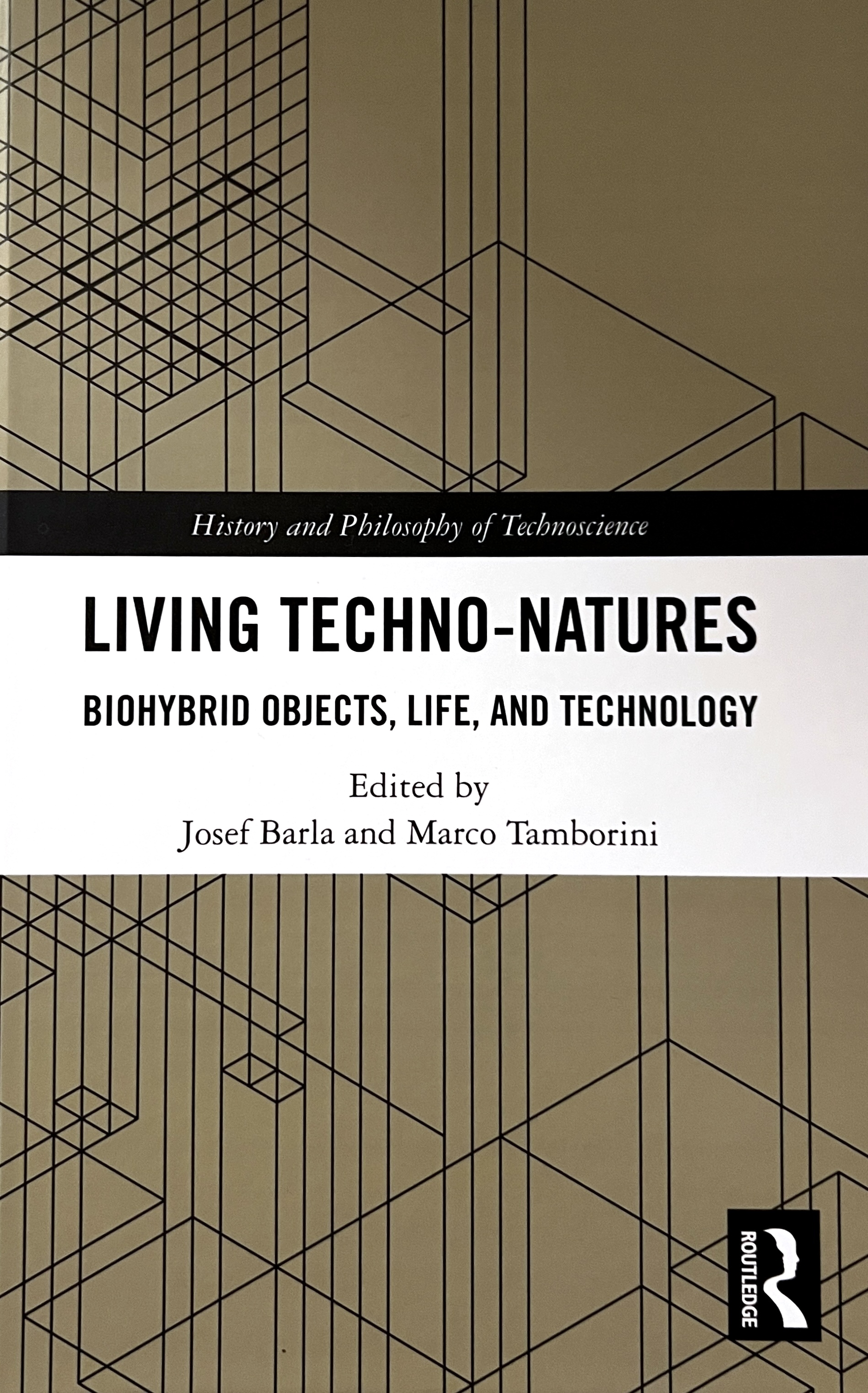
Living Techno-Natures: Biohybrid Objects, Life, and Technology

Barla, J., and Marco Tamborini. 2026. Living Techno-Natures: Biohybrid Objects, Life, and Technology, History and Philosophy of Technoscience series, New York and London: Routledge.

Barla, J. "When Life is Made to Work Against Itself: Synthetic Biology, Metabolic Death Labor, and the Mechanization of Death". In Josef Barla and Marco Tamborini (Eds.), Living Techno-Natures: Biohybrid Objects, Life, and Technology (pp 41–56), New York and London: Routledge.


Ecologies of Control: The Algorithmization of Borders and the Emergence of Transversal Solidarity

Barla, J., and Christoph Hubatschke. 2025. "Ecologies of Control: The Algorithmization of Borders and the Emergence of Transversal Solidarity". In Environments, Ecosystems, and Ecologies, Oxford Intersections: Borders. Ed. Maano Ramutsindela. Oxford: Oxford University Press. DOI: 10.1093/9780198945222.003.0015


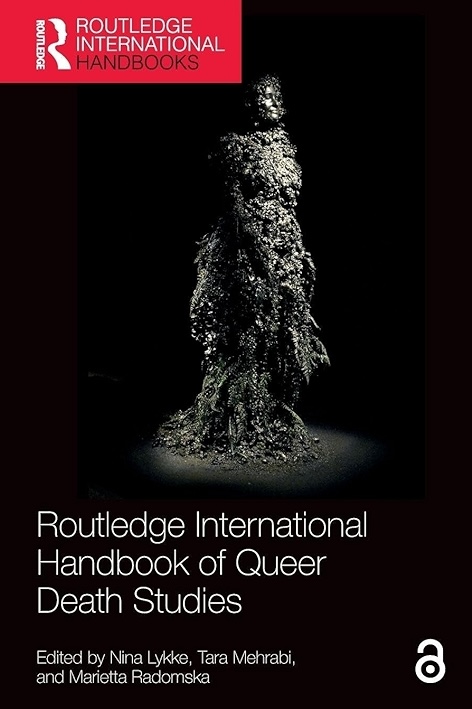
Making death on a molecular scale: transgenic mosquitoes, more-than-human biopolitics, and the emergence of necrovalue

Barla, J. 2025. "Making death on a molecular scale: transgenic mosquitoes, more-than-human biopolitics, and the emergence of necrovalue". In Nina Lykke, Tara Mehrabi, and Marietta Radomska (Eds.), Handbook of Queer Death Studies (pp. 183–191), New York and London: Routledge.


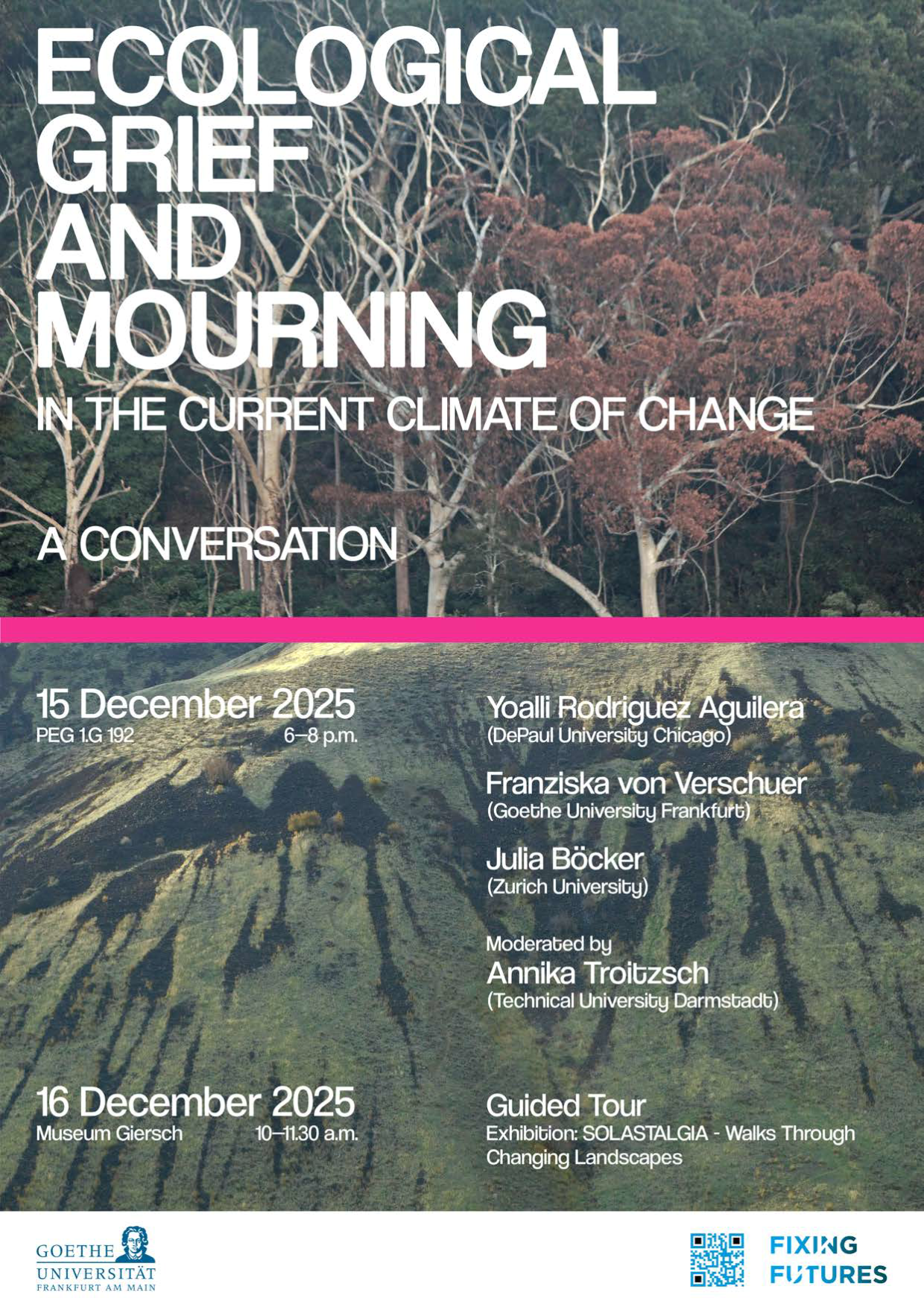
15.12.2025 || 18 – 20 Uhr c.t. || Professur für Biotechnologie, Natur und Gesellschaft || Goethe-Universität Frankfurt || Uni Campus Westend || PEG 1.G 192

Speakers: Dr. Yoalli Rodriguez Aguilera (DePaul University Chicago), Dr. Franziska von Verschuer (Goethe University Frankfurt), Dr. Julia Böcker (Zurich University)

Moderated by Annika Troitzsch (Technical University Darmstadt)

Climate change and other contemporary environmental challenges are shaking the foundations and certainties of previous ways and forms of life all around the globe. As an increasing number of studies show, these developments not only raise technical and political questions but also evoke a host of affective responses. One emerging phenomenon that this panel discussion focuses on is what scholars are now calling environmental or ecological grief. The conversation brings together three scholars whose empirical research explores different forms, sites, and practices of grief and mourning beyond the human. Through the anticipatory grief of foresters over dying forests, the grief and resistant mourning of Black or Indigenous communities facing the destruction of their homes and livelihoods, and artistic practices of mourning biocultural diversity loss, the panel explores what it means to feel, practice, and live with—as well as research and think with—ecological grief and mourning.

Complementary event on Tuesday, 16 Dec 2025, 10.00 – 11.30 a.m.: 


Guided tour of the exhibition "Solastalgia: Walks through changing landscapes" at Goethe University's Museum Giersch (English)

To join the exhibition, please register via email to: verschuer(at)soz.uni-frankfurt.de


09.12.2025 || 18 Uhr  || Awarding of the Cornelia Goethe Preis 2025 to Dr. Sophie Bauer || Goethe-Universität Frankfurt Guest House || Frauenlobstraße 1, 60487 Frankfurt am Main

Am 9. Dezember 2025 wird Dr. Sophie Bauer im Rahmen des diesjährigen Cornelia Goethe Salons der Cornelia Goethe Preis 2025 verliehen. Sie erhält ihn für ihre Dissertation "'Das Natürlichste, was eine Frau haben kann'. Eine Soziologie der Menstrualität."

Sophie Bauer war bis vor wenigen Monaten Wissenschaftliche Mitarbeiterin am FB 03 Gesellschaftswissenschaften im Soziologie-Schwerpunkt Biotechnologie, Natur und Gesellschaft.

Mehr Informationen: www.cgc.uni-frankfurt.de


How has the world lost three quarters of its crop diversity in less than a century? How does a collection of seeds frozen in the Arctic help face this loss and ensure future food security? And how can Indigenous knowledges and artistic interventions inspire modes of dealing with agrobiodiversity loss that respond to contemporary socio-ecological transformations with care rather than techno-salvationism? Franziska von Verschuer traces these questions from the world's stronghold against agrobiodiversity loss, the Svalbard Global Seed Vault, to divergent worlds and modes of world-making it assembles along with seeds. This study shows that the future is more open than the popular story of the 'doomsday vault' suggests.


Franziska von Verschuer (2025): Collecting Seeds, Assembling Worlds. An Inquiry into Agrobiodiversity Conservation Through the Svalbard Global Seed Vault. Bielefeld: transcript.


23.10.2025 || 16 – 18 Uhr c.t. || Professur für Biotechnologie, Natur und Gesellschaft || Goethe-Universität Frankfurt || Uni Campus Westend || PEG 1.G 192
Abstract

Ben Anderson argues that amid the multiple ends and afterlives of neoliberalism in the UK and USA post the 2008 financial crisis we are witnessing a 'crisis of intensity', a crisis of whether life feels too much or too little. Crises of intensity are recurrent features of twentieth century capitalism and have four components: a disjuncture between actual experience and desired experience; judging the present in terms of 'too much' and/or 'too little'; a diagnosis of the present in terms of 'maladies of intensity' (such as burnout or outrage); and the proliferation of promises of 'good intensity' (from new types of relaxation through to the excitement of extreme sports).

After giving examples of past crises of intensity articulated with the end of the Fordist settlement and expressed through claims of boredom, he will show how contemporary right-wing populism is simultaneously symptom, cause, and promised resolution to a crisis of intensity marked by the indeterminacy of whether life should feel 'more' or 'less'. As well as showing how this promised resolution is articulated with a series of right wing adjacent online cultures, he will speculate on the implications of this present crisis of intensity for transformations in capitalism and the futures of populism.

Bio

Ben Anderson is a Professor of Human Geography at Durham University. He has published extensively on affective life as articulated with politics, as well as how futures are governed amid uncertainty. He is co-author (with Prof. Anna J Secor) of The Politics of Feeling: Populism, Progressivism, Liberalism (Goldsmiths/MIT, 2025) and Encountering Affect: Capacities, Apparatuses, Conditions (Routledge, 2014). As well as theoretical work on conjunctural analysis and attachment and detachment as affective relations, his current research focuses on the politics of intensity in right-wing populism and on climate change disaffection.